Date:2/24/26 Tuesday, 10.30am
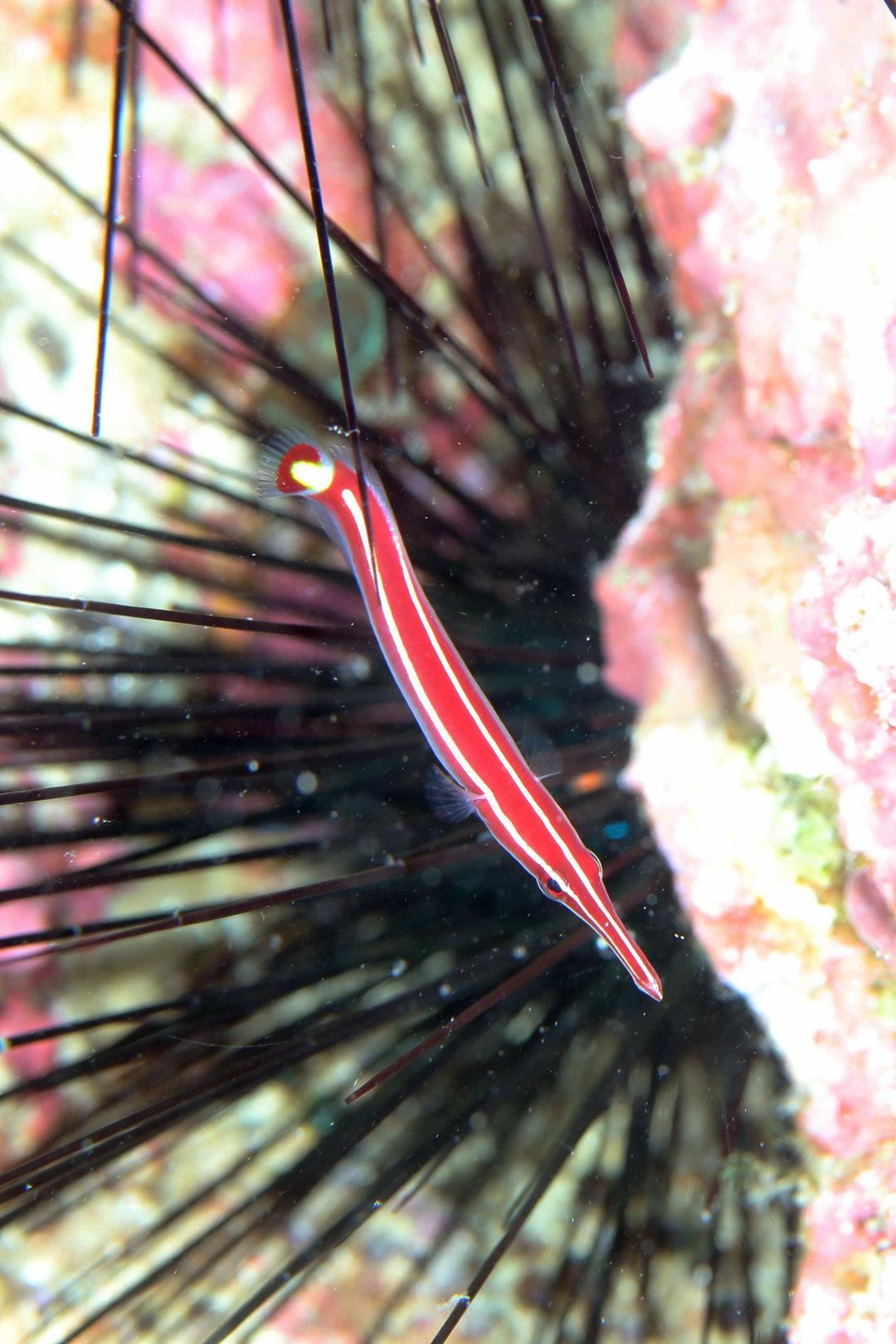
Happy Tuesday, everybody! Today's fish of the day is the long snout clingfish!
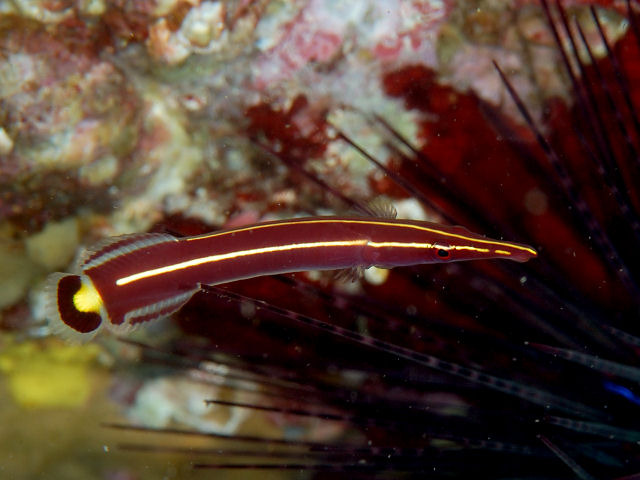
The long snout clingfish, also known as the urchin clingfish, and scientific name Diademichthys lineatus, is a personally beloved fish of mine! Found in and around the Western Indo-Pacific from the gulf of Oman down to Papua New Guinea, especially around Western Australia. These fish live exclusively in depths of 1-40 meters in reefs, with thriving populations especially in the Ningaloo reef, Timor sea, and Northern regions of the Great Barrier Reef.
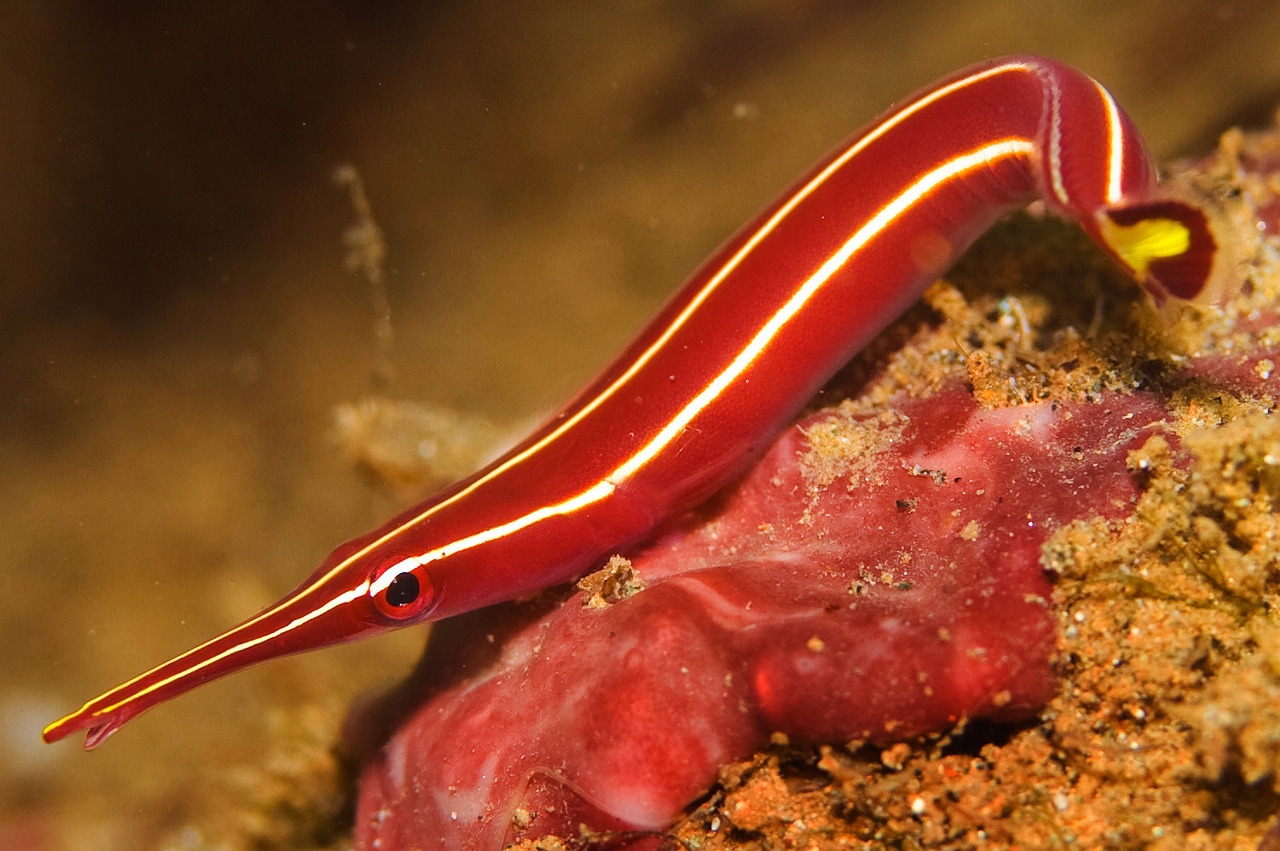
As one might predict, based on the urchin clingfish name, these fish are incredibly small. Only reaching a total possible size of 5cm, or 2 inches total. This is due to these fish's lifestyle, which almost entirely revolves around urchins, and nearby reef animals. The diet of the long snout clingfish is once again segregated by sex, with female fish eating outside of the urchin, feeding on bivalves, corals, and various crustaceans. However male fish feed on the tube feet of the urchin, often keeping their host anchored to a single location or region. These fish will spend a majority of their time hovering inside the spines of these urchins as protection. However, larger fish, those who reach a size over 30mm, will often leave the protection of the urchin, to instead live inside empty bivalve shells. This sudden lack of protection for larger and often adult fish may be why these fish contain a toxin in their mucus, harming other animals who touch them. This toxin is related to a similar one called "grammistin", similar to bee stings, which is designed to burst the cells of mammals and fish.
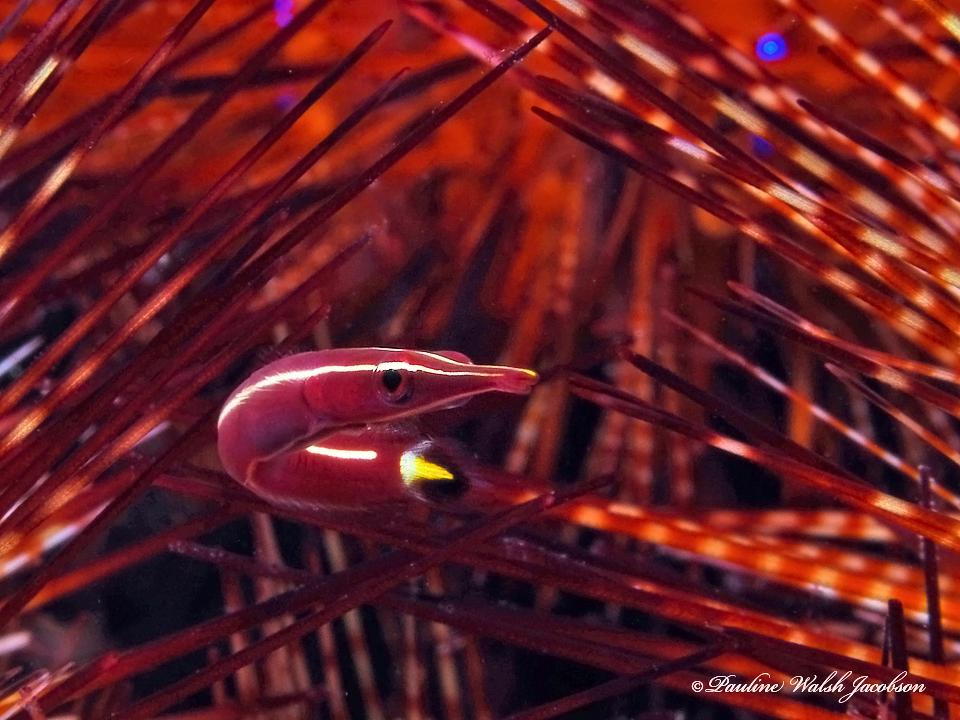
The lifecycle of these fishes is relatively unknown, as despite significant interest in these fish by hobby aquarists and various other captive fish collectors, these fish are incredibly hard to breed. However, we do have some information! Female fish are defined by the longer, much more angular snout, with male fish possessing a rounded and shorter snout. After these fish have successfully bred, the male fish will remain the urchin with them full time, no longer venturing out to woo female fish, near constantly fanning them to provide excess oxygen. Once hatched, the fry live inside their urchin of birth, surviving off of the various algae, and yeasts on the surface of the urchin's body. These fish will go on to survive around 6 years total in captivity, with an unknown lifespan in the wild.
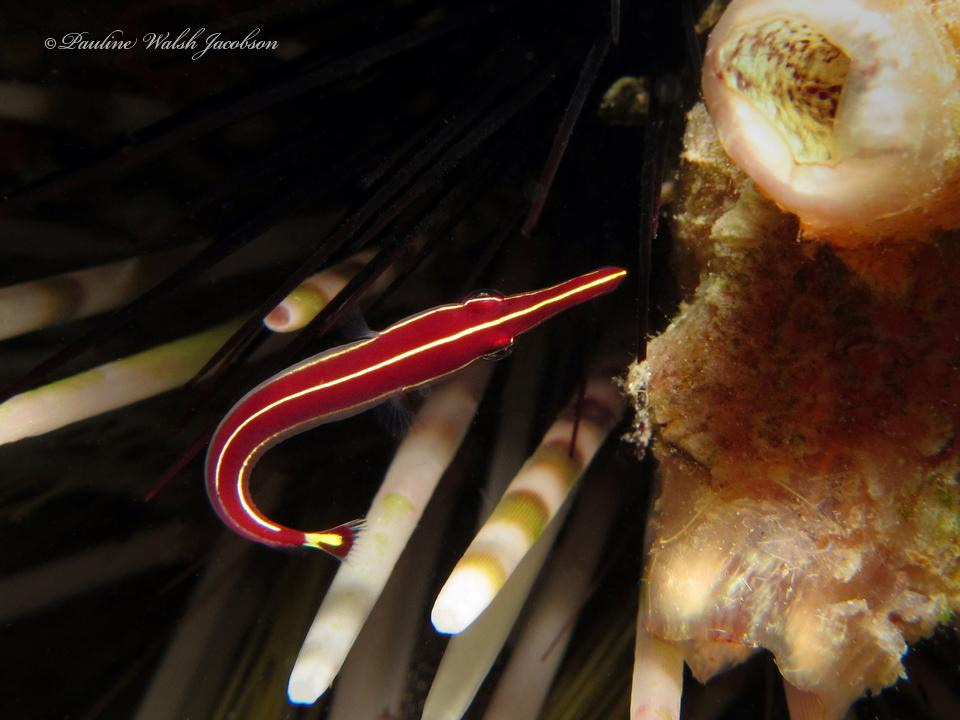
That's the long snout clingfish, everybody! I hope you all had a wonderful time reading about them.
Sources:
“Diademichthys Lineatus Summary Page.” FishBase, www.fishbase.se/summary/Diademichthys-lineatus
“Urchin Clingfish .” Practical Fishkeeping, www.practicalfishkeeping.co.uk/features/urchin-clingfish-a-reef-oddity/.
“Striped Clingfish, Diademichthys Lineatus.” Fishes of Australia, fishesofaustralia.net.au/home/species/4135